


Why Do I Have Heel pain When I First Get Out of Bed?

Updated: Sep 3
By Dr. Meredith Sappington, DPM
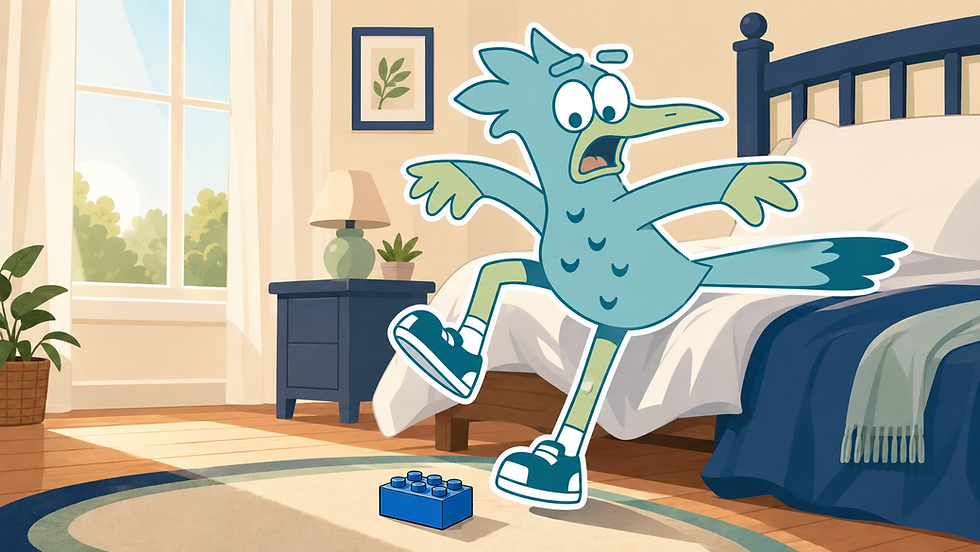
If your first step out of bed feels like you stepped directly onto a LEGO, you are not alone!
One of the first questions I ask someone with heel pain is:
“Does it start feeling better after you’ve walked around for a few minutes?”
Then I ask:
“When you’ve been sitting for a while, does that first step hurt all over again?”
If you answered yes to both questions, plantar fasciitis is high on my list—but it is not the only possibility.
Why is heel pain worse in the morning?
The plantar fascia is a thick band of tissue that runs along the bottom of your foot, connecting your heel to the front of your foot. It helps support your arch and absorbs stress every time you stand or walk.
When the plantar fascia is repeatedly overloaded, the tissue can become irritated and develop small areas of damage.
After several hours off your feet, the plantar fascia is not being stretched or loaded the way it is during the day. Your first step suddenly places tension through the tissue while also loading it with your full body weight. That is why those first few steps can be so painful.
As you continue walking, the tissue gradually becomes more flexible and the pain may improve. But that temporary improvement does not necessarily mean the underlying problem is gone.
Why did the plantar fascia become overloaded?
Several factors can contribute to plantar fasciitis, including:
Tight calf muscles
Limited ankle flexibility
Flat feet or high arches
The way your foot moves when you walk
Shoes that do not provide enough support
A sudden increase in walking, running, or exercise
Standing for long periods
Changes in activity level or body weight
Often, more than one factor is involved.
This is why two people with pain in the same part of the heel may need different treatment plans. One person may primarily need to improve calf flexibility. Another may need better mechanical support. Many patients need both.
Is morning heel pain always plantar fasciitis?
No. Plantar fasciitis is common, but not every painful heel has the same diagnosis.
Other possible causes include:
A calcaneal stress fracture
Heel fat pad irritation or thinning
Nerve irritation or entrapment
Achilles tendon problems
Arthritis
A plantar fascia tear
Inflammatory conditions
Pain referred from another area
The location of the pain, how it began, what makes it worse, and what I find during your examination all matter.
I never ignore it when someone tells me, “Something just doesn’t feel right.”
If your symptoms do not follow the typical pattern—or if your pain is severe, worsening, or associated with an injury—it is important to look further rather than assuming it is routine plantar fasciitis.
How I evaluate heel pain
I start by listening to the full history of the problem.
I want to know:
Where the pain is located
When it began
Whether it is worst during the first few steps
Whether there was an injury or sudden increase in activity
Which shoes you wear most often
What treatments you have already tried
Whether the pain is changing or getting worse
During the examination, I check the exact location of tenderness, calf and ankle flexibility, foot structure, strength, nerve symptoms, and how the foot functions.
X-rays may be taken to evaluate the bones and overall foot structure. A heel spur may appear on an X-ray, but the spur itself is not always the source of the pain. Many people have heel spurs without symptoms, while others have significant plantar fascia pain without a large spur.
The goal is to treat the person and the actual cause of the pain—not simply an X-ray finding.
My treatment philosophy
I am much more interested in understanding and addressing why your heel hurts than simply making it hurt less for a few days.
Think about the check-engine light in your car. You can ignore it because the car still drives, but ignoring the warning light does not fix the problem under the hood.
Heel pain is similar. Your body is telling you that something is not functioning the way it should.
My goal is to identify why the plantar fascia is continually being overloaded and address the contributing factors. That means treating today’s pain while also trying to reduce the chance that it will keep returning.
What does plantar fasciitis treatment usually include?
Treatment should be based on the cause of the pain, the severity of the symptoms, and how the condition is affecting your life. For many patients, the starting plan addresses three areas.
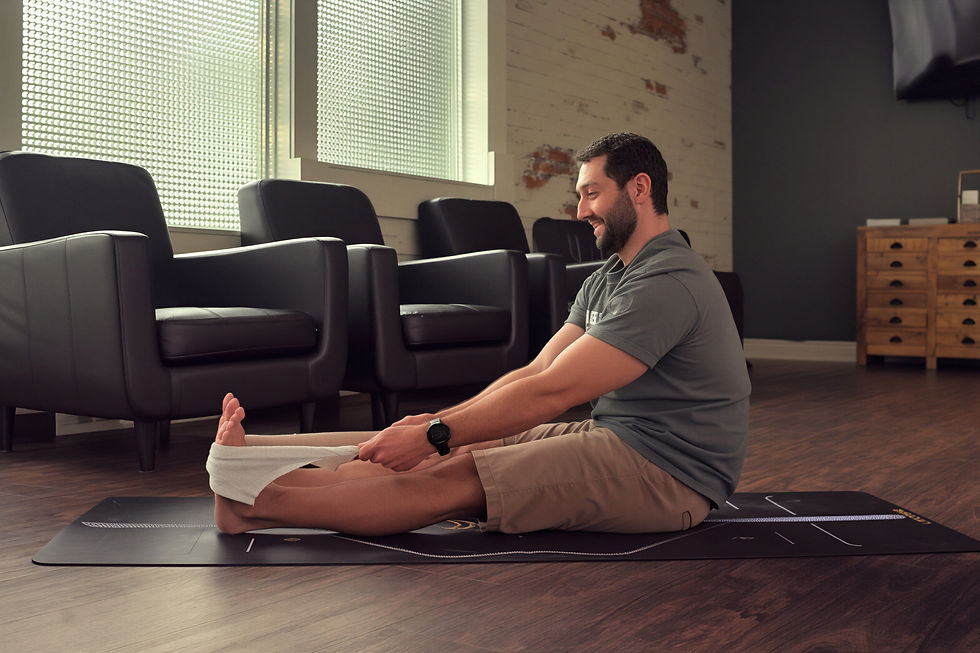
1. Improving flexibility
Calf tightness places additional tension on the plantar fascia. Consistent stretching can improve ankle flexibility and reduce that pull.
The key word is consistent. Stretching occasionally is not usually enough to create a meaningful change.
2. Reducing strain and improving support
Supportive shoes reduce strain on the plantar fascia. Avoiding barefoot walking—especially on hard floors—can also help during a painful flare. For some patients, a quality supportive shoe or over-the-counter insert may be enough. Others benefit more from custom orthotics. Custom orthotics are designed around your individual foot structure and mechanics. They can redistribute pressure, improve support, and help control the movement that is repeatedly stressing the plantar fascia.
Not everyone with heel pain needs a custom orthotic, but when abnormal mechanics are a major part of the problem, the right support can make a significant difference.

3. Controlling the current pain
Depending on the patient, this may include modifying aggravating activities, using ice, changing footwear, or considering medication when it is medically appropriate.
A corticosteroid injection may be considered when pain is significant enough to interfere with walking or normal daily activity. The injection can help calm the painful tissue while stretching, supportive shoes, and orthotics address the factors contributing to the problem.
An injection should not be the entire treatment plan. If the underlying mechanical problem is never addressed, the pain is more likely to return. Steroid injections also need to be used thoughtfully. Repeated injections can weaken the plantar fascia or affect the protective fat pad beneath the heel.

What if the pain does not improve?
If someone has followed an appropriate treatment plan but continues to have pain, I reconsider both the diagnosis and the treatment approach.
Platelet-rich plasma, or PRP, may be an option for selected patients with persistent plantar fascia pain. PRP uses a concentrated portion of the patient’s own blood to support the body’s healing response. It is different from a corticosteroid injection because its purpose is to support healing in chronically damaged tissue rather than simply provide temporary pain relief.
Persistent pain does not automatically mean surgery. Most people with plantar fasciitis improve without an operation.
However, surgery can be considered when symptoms remain limiting despite a thorough course of conservative care and the diagnosis has been confirmed. If surgery truly becomes the appropriate next step, I explain exactly what is causing the pain, what the procedure is intended to correct, and what recovery will involve.
When do I recommend an MRI?
An MRI is not necessary for every case of heel pain.
I begin thinking about advanced imaging when:
You cannot bear weight on the foot
The pain is worsening despite treatment
Your symptoms or examination do not fit typical plantar fasciitis
I am concerned about a stress fracture, tear, nerve problem, or another diagnosis
You have had little or no improvement after a consistent course of appropriate treatment
An MRI allows us to evaluate the plantar fascia, surrounding soft tissues, and bone in greater detail. It can help confirm the diagnosis or reveal another reason the heel is not improving.
When should you make an appointment?
Consider having your heel evaluated if:
The pain is persistent or worsening
You are changing the way you walk
You cannot comfortably bear weight
The pain began after an injury
You have swelling, bruising, numbness, or burning
Home treatment is not helping
The pain is limiting work, exercise, or normal daily activities
You do not have to wait until heel pain becomes unbearable. Identifying the cause early often makes treatment more straightforward.
The bottom line

Heel pain during the first few steps in the morning is a classic sign of plantar fasciitis, but it should not automatically be assumed that every painful heel has the same diagnosis.
A successful treatment plan should do more than temporarily reduce pain. It should address the tightness, mechanics, activity changes, or other factors that caused the plantar fascia to become overloaded in the first place.
At Brazos Foot & Ankle, we evaluate heel pain carefully and build treatment around the individual patient. Our goal is to help you understand what is causing the pain, what can be done about it, and when additional testing or treatment may be appropriate.
Still have questions?
If heel pain is interfering with your day, call Brazos Foot & Ankle at 254-300-7703 or schedule an appointment online. We are located in Waco and care for patients throughout Central Texas.
Comments